

Knowledge Base November 24, 2026
How to Choose a Barbell: Match the Bar to Your Training, Then Check 5 Specs
Quick Summary: A barbell is chosen by training style first — weightlifting bars are built for speed and whip, powerlifting bars for stiffness and grip, and a good hybrid bar covers most gyms.
Then check four things: shaft diameter, knurling, sleeve rotation, and tensile strength. For a gym owner or brand, one well-specified bar outlasts three cheap ones.
Sourcing barbells for a gym or your own brand? Get a factory-direct quote →
Match the Bar to Your Training Style
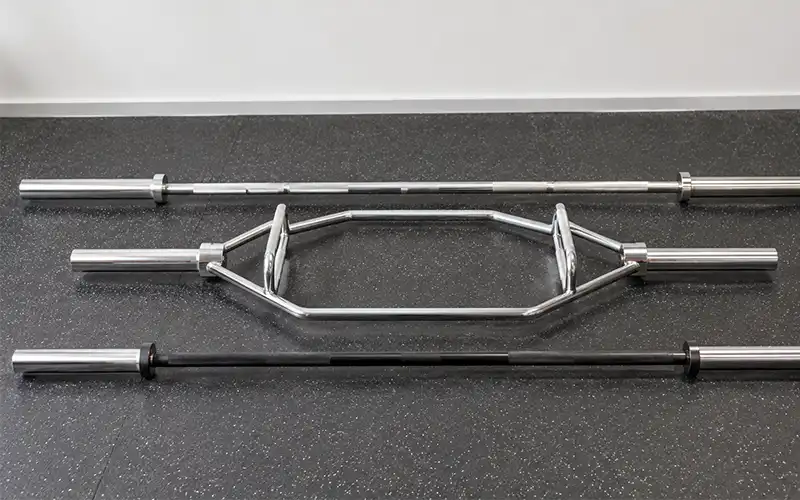
Every barbell question starts with the same one: what will this bar be asked to do? A bar built for Olympic lifting is thin, whippy, and spins fast; a bar built for powerlifting is thick, stiff, and grips hard. Neither is better — they are tools for different jobs, and most disappointed barbell buyers skipped this step.
The four families:
If you are buying one bar for a mixed gym, buy the hybrid. It presses, squats and pulls well, and it handles the occasional fast lift without complaint. A dedicated weightlifting bar only pays off when your gym actually runs Olympic lifting classes; a dedicated power bar only pays off when members compete or chase max singles. Specialty bars are additions, never the first purchase.
| Bar type | Built for | Signature traits |
|---|---|---|
| Olympic weightlifting bar | Snatch, clean & jerk, fast lifts | 28 mm shaft (men) / 25 mm (women), bearing sleeves, long whip |
| Powerlifting bar | Squat, bench, deadlift at max load | 29 mm stiff shaft, aggressive knurl, center knurl, almost no whip |
| Hybrid / all-purpose bar | Most commercial gyms and studios | ~28.5 mm, medium knurl, bushing sleeves, tolerates everything |
| Specialty bars | Variety, rehab, specific programs | Hex (trap) bar, EZ bar, safety squat bar |
Shaft Diameter and Length: The Specs That Decide Grip
Shaft diameter decides how the bar feels in your hands before any other spec matters. Diameter is standardized by discipline, and the differences are bigger than they look on paper:
Thinner is not lighter — it is different. A 25 mm women's bar flexes and whips noticeably more than a 29 mm power bar under the same plates, which is exactly what a snatch wants and exactly what a heavy squat does not. A 28 mm shaft is the sweet spot for the hook grip; 29 mm puts more steel under a 400 kg deadlift and spreads the load over more palm.
Sleeve diameter is the other number to confirm: 50 mm. All standard plates are drilled for 50 mm sleeves. A bar with a different sleeve diameter will not take your existing plate stock, so confirm this line on the spec sheet before ordering in bulk.
| Bar | Length | Weight | Shaft diameter |
|---|---|---|---|
| Men's Olympic bar | 2.2 m | 20 kg | 28 mm |
| Women's Olympic bar | 2.01 m | 15 kg | 25 mm |
| Powerlifting bar | 2.2 m | 20 kg | 29 mm |
| Typical hybrid bar | 2.2 m | 20 kg | 28.5 mm |
Knurling: Marks, Depth, and What Your Hands Will Feel
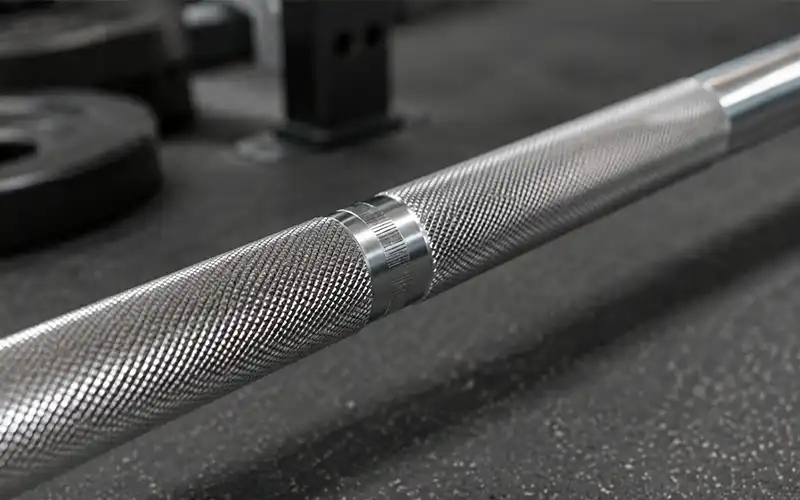
Knurling is where buyers get burned, because you cannot judge it from a product photo. The marks — the ring-shaped grooves pressed into the shaft — set your grip width, and the depth decides whether heavy sets feel secure or shredding.
What the marks mean: powerlifting bars carry a center knurl (it anchors the bar on your back in a squat) and grip marks 810 mm apart, matching IPF bench rules. Weightlifting bars usually have no center knurl — the shaft rests against your throat in a clean — and marks spaced 910 mm apart for the IWF snatch and clean grip. No marks at all usually means a cheap generic bar.
Depth is a crowd decision. Aggressive knurl locks into the hand under a max deadlift but punishes high-rep cleans and members with soft palms. For a commercial gym with mixed traffic, medium-depth knurling on a hard chrome shaft is the configuration with the fewest complaints. If your brand caters to competitors, go sharper — and say so honestly in the spec sheet.
Sleeve Rotation: Bushing vs Bearing
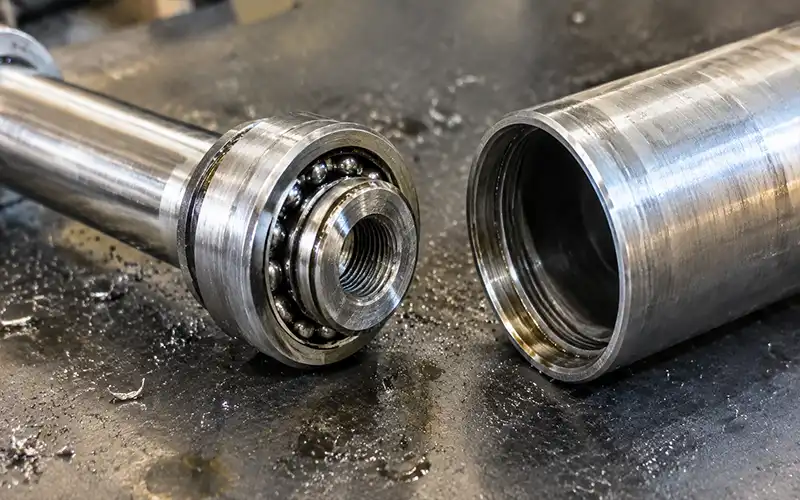
Rotation is invisible until the day someone catches a clean — and then it is the only spec that matters. The sleeve is what spins around the shaft, and it is built one of two ways:
• Bushing. A brass or composite collar between shaft and sleeve. Slower spin, plenty for squats, presses, deadlifts and rows — the standard for hybrid and gym bars, and the more durable, lower-maintenance choice.
• Bearing. Needle bearings packed inside the sleeve. The spin is fast and nearly frictionless, which is what a snatch and clean need when the hands must turn under the bar. More bearings (dual vs single) means smoother and pricier.
Whip is the third piece: the shaft's elastic flex under speed. Thin shaft + bearing sleeves = a lively bar that stores energy through the pull. Thick shaft + bushings = a dead, predictable bar. That is why "fast" and "stiff" never live in the same bar — and why the training-style question from section one decides this whole section.
Have questions about your specific requirements?
Talk to Our Team →Tensile Strength: The Number That Predicts Bending
Tensile strength is the number that predicts whether a bar bends — and bending, not breaking, is what actually happens to bad bars. Tensile strength (measured in PSI) describes the steel's resistance to being pulled apart; yield strength describes the point at which it permanently deforms. Marketing loves the first number; your rack cares about the second.
For gym owners, the honest variable is drop volume. A hybrid bar dropped from overhead forty times a day lives a different life than one racked for squats. If your programming includes regular Olympic lifting, buy above the entry tier — and treat tensile strength and warranty terms together. A supplier who will not put a bend warranty in writing is telling you something.
| Tier | Tensile strength | What it is good for |
|---|---|---|
| Entry-level | ~120,000 PSI | Home gyms, light commercial, low drop volume |
| Quality commercial | 150,000–190,000 PSI | Full commercial gyms, daily training, moderate drops |
| Competition grade | 190,000–220,000 PSI | Lifting platforms, powerlifting, heavy repeated drops |
Coating and Finish: How the Bar Survives Your Gym
The finish decides how the bar feels in month twelve, not month one.
One warning about black oxide: it looks great in photos and rusts first in real gyms. If the bar will live in a humid room, near a coast, or in members' sweat, hard chrome or stainless pays for itself.
| Finish | Grip | Rust resistance | Best for |
|---|---|---|---|
| Hard chrome | Smooth, secure | Good | The default for commercial gyms |
| Black oxide | Raw steel feel | Poor — needs wiping down | Dry, cared-for spaces; budget builds |
| Cerakote / colored | Slightly softer | Good | Brand colors and branded equipment lines |
| Stainless steel | Sharpest, best when wet or chalked | Excellent | Premium bars, coastal or humid gyms |
A Two-Minute Checklist Before You Buy
Five checks, two minutes, and most bad bars reveal themselves on the spot.
1. Spin test. Hold the shaft and spin the sleeve with one hand. It should rotate freely and coast; grinding or wobble means bearing or fitting problems.
2. Sleeve fit. Grab the sleeve and try to rock it side to side against the shaft. Any play now becomes rattle and wear in six months.
3. Knurl check. Run your palm across the knurl: you should feel definition without pain. Press hard and twist — a bar that slips when chalked is under-knurled for real work.
4. Weight and straightness. Confirm the stated weight (commercial tolerance should be within ±1–2%) and roll the bar on the floor; a bar that curves back is already bent.
5. Spec sheet. Shaft diameter, sleeve diameter, tensile strength, bearing type, finish. If any line is missing, the supplier is hiding it.
Buying for a gym or your own brand? All of these points belong in your purchase specification, not in hope. Lander Sports manufactures barbells, weight plates, racks and accessories at our ISO 9001-certified factory in Rizhao, Shandong — 20+ years of steel forging and surface-treatment experience. For OEM orders we can adjust shaft diameter, knurl depth and marks, sleeve type, finish (including your brand colors) and laser-engraved logos, with pre-production samples before any bulk order.
Going deeper: our Olympic barbell bar buying guide covers bar specs in full detail, how barbell plates are made shows what pairs with your bars, browse the weightlifting bar line, or get a factory-direct quote for your bar program.
Frequently Asked Questions
- 1. What barbell should a beginner buy?
- A 20 kg, 2.2 m bar with a 28–28.5 mm shaft, medium knurl and bushing sleeves — in other words, a hybrid bar. It handles squats, presses, deadlifts and rows well and forgives the occasional fast lift. Beginners rarely need bearing sleeves or competition-grade steel; they need a straight bar that holds tolerance.
- 2. Bushing or bearing barbell — which do I need?
- Bushings are enough for squats, bench presses, deadlifts and most general training, and they are more durable with less maintenance. Needle bearings are worth it only when your training includes snatches, cleans and jerks, where the sleeve must spin fast enough for the hands to turn under the bar.
- 3. What tensile strength should a gym barbell have?
- For commercial use, look for 150,000 PSI or higher, and also ask about yield strength and the bend warranty. Bars rated around 120,000 PSI are entry-level and fine for home gyms, but they are the ones that take a permanent bend in high-volume gyms.
- 4. Can we order barbells with custom specs and our logo?
- Yes. As an OEM manufacturer we produce bars to specification — shaft diameter, knurl pattern and depth, sleeve type, finish color, and laser-engraved logos. A pre-production sample is standard before bulk orders. Contact us with your specification for a quote and lead time.