

Manufacturing June 15, 2026
Barbell Plates Factory in China | Rubber, PU, CPU, TPU OEM/ODM | LanDer Fitness
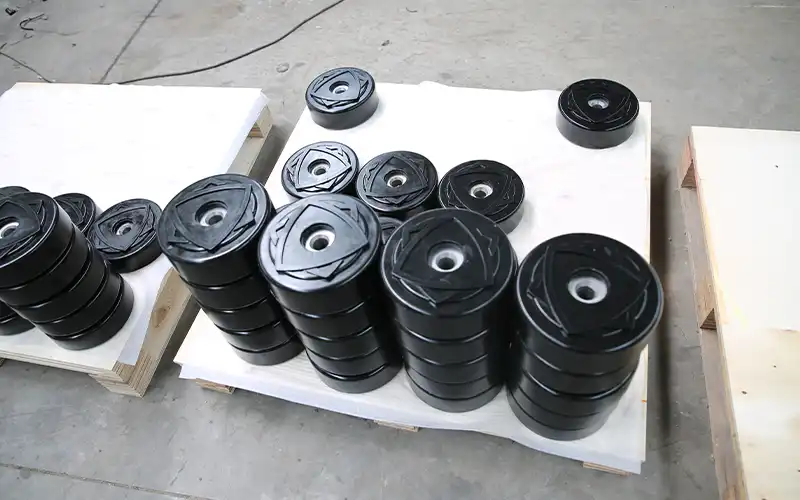
Quick Summary: We make barbell plates at our factory in Rizhao, China. 7 production steps, 4 coating materials, 6 QC checks per batch.
Whether you need standard rubber plates at factory prices or custom-branded plates for your fitness brand, this is how we do it — and what you should know before ordering.
Contact us for a quote within 48 hours →
Whether you need standard rubber plates at factory prices or custom-branded plates for your fitness brand, this is how we do it — and what you should know before ordering.
Contact us for a quote within 48 hours →
The Real Problem with Cheap Barbell Plates
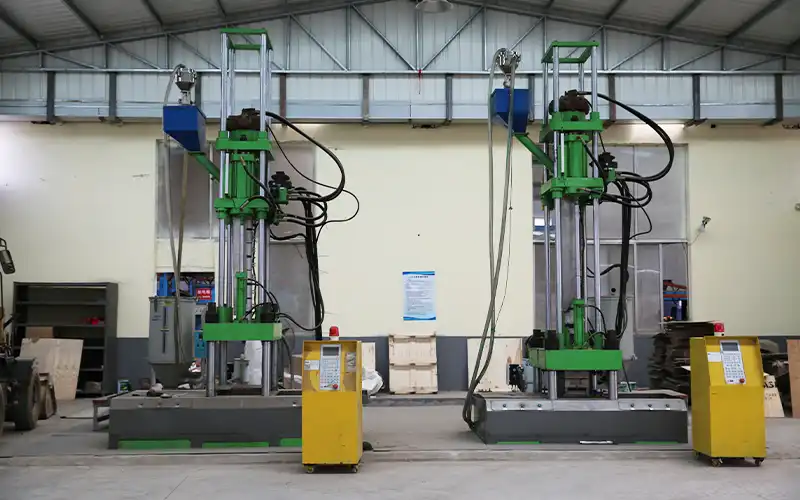
Rubber that peels off the steel core after 3 months of use is almost always a surface preparation failure — not a coating failure.
Most buyers compare price per kilogram and stop there. But the differences that actually matter — steel grade, adhesion quality, weight tolerance, odor level — are invisible until the plates arrive at your warehouse. By then it's too late.
We've been manufacturing plates for 20+ years and shipping to 50+ countries. The process described below is exactly what every client sees when they visit our facility in Rizhao, Shandong.
Steel Core: Cutting, Drilling, and Why 2mm Matters
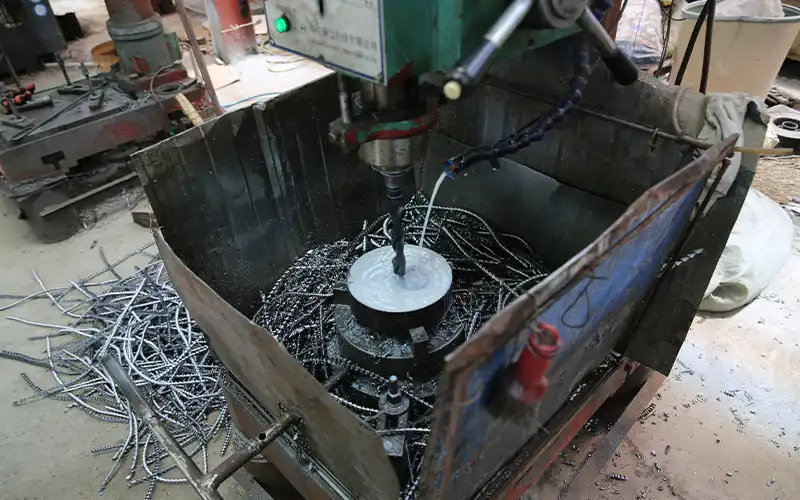
An error of just 2mm in the cutting stage becomes a weight error that compounds through every subsequent step — and cannot be fixed later.
We start with certified carbon steel from qualified Chinese mills. Every batch arrives with material certificates for full traceability. The steel is precision-cut to the exact diameter required, from compact 1.25kg micro-plates to 25kg full-size discs.
Each center hole is CNC-drilled to Olympic bar specification: 50mm diameter with tolerance under 0.5mm. Too loose and the plate wobbles on the bar. Too tight and loading becomes a daily frustration for gym users. After drilling, every hole is deburred — no sharp edges and no damage to barbell sleeves.
Quick check when comparing suppliers: Ask for weight tolerance data from their last 3 production runs. If they cannot provide it, the plates won't be consistent.
Surface Preparation: The Step Cheap Factories Skip
80% of rubber delamination problems trace back to this invisible step. The coating itself is rarely the culprit.
Before rubber touches steel, the surface must be absolutely clean and properly textured. Our three-stage preparation:
1. Degreasing — Industrial solvents remove all machining oils, residues, and contaminants from the steel surface.
2. Sandblasting — Creates microscopic surface roughness. This is what the rubber compound physically grips onto during molding.
3. Pre-heating — Warming the steel core before coating ensures the rubber compound flows evenly and bonds at the molecular level during hot pressing.
Skip any one of these, and the rubber coating eventually separates from the steel. It may take 3 months or 12 months, but it will happen.
Hot Press Molding: Where Rubber Bonds to Steel
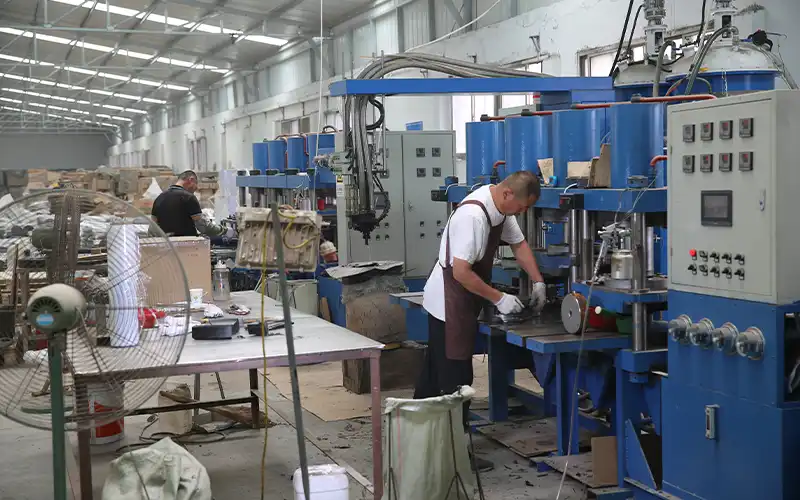
150–200 tons of pressure at 140–170°C, with temperature curves recorded for every single batch.
Hot press compression molding is the core of barbell plate manufacturing. Here is how it works in our factory:
1. Mold preparation — Steel mold cleaned, pre-heated to 140–170°C, and coated with release agent.
2. Base layer — A precisely measured amount of rubber compound is placed into the lower mold half.
3. Core positioning — The prepared steel core is centered on the rubber base.
4. Top layer — Another measured layer of rubber compound completely covers the steel core.
5. Hot press — The mold closes under 150–200 tons. Heat and pressure cause the rubber to flow around the steel and bond at the molecular level.
6. Curing — Rubber cures under sustained heat and pressure for 8–15 minutes, depending on plate thickness.
7. Cooling and demolding — The mold opens and the finished plate is removed for cooling.
Our operators continuously monitor temperature and pressure readings. Consistent heat and pressure are what transform raw rubber compound into a durable, well-bonded coating. This is not a step where you cut corners.
Have questions about your specific requirements?
Talk to Our Team →4 Coating Materials — Which One Fits Your Market?
Not every market needs the same plate. Pick the material that matches your customer expectations — and your price point.
Not sure which material is right for your market? Tell us where you sell and your target price point — we will recommend the best fit. No cost, no commitment.
| Material | Best For | Service Life |
|---|---|---|
| Standard Rubber | Budget gym chains, bulk export orders | 3–5 years |
| PU (Polyurethane) | Boutique studios, hotel gyms, premium retail | 5–7 years |
| CPU (Cast Polyurethane) | Competition facilities, high-end commercial gyms | 7–10 years |
| TPU (Thermoplastic Polyurethane) | Apartment gyms, noise-sensitive environments | 5–7 years |
6 QC Checks Every Batch Goes Through
Plates that fail any of these checks never reach the packaging area. Period.
1. Weight tolerance — Every plate weighed on calibrated scales. Standard: ±2%. Competition-grade: ±1%.
2. Visual inspection — Surface checked for bubbles, cracks, uneven coating, flash lines, and color inconsistency.
3. 2-meter drop test — Sample plates dropped onto concrete. Must show no cracking, no separation, no visible coating damage.
4. Center hole fit — Random plates test-mounted on Olympic bars to verify smooth fit and correct clearance.
5. Odor assessment — Residual odor levels evaluated on every batch, especially for indoor and premium-market orders.
6. Marking durability — Embossed logos and weight markings must remain legible after simulated wear and cleaning cycles.
Your Brand, Your Colors, Your Packaging
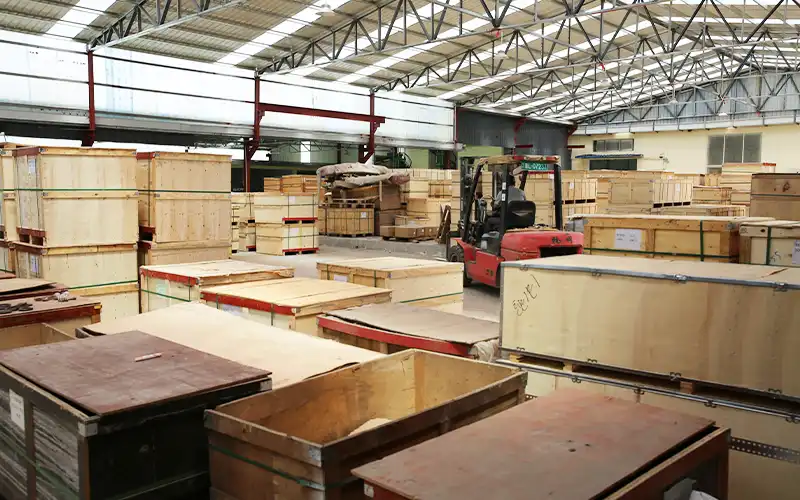
Your plates carry your brand — not ours. We give you full control over how they look and how they arrive.
• Embossed logos — Your brand name molded permanently into the rubber surface. Cannot be removed.
• Engraved weight markings — Clean, precise kg or lb indicators permanently cut into the surface.
• Silk-screen printing — Multi-color graphics, safety warnings, and detailed artwork.
• Pantone color matching — Plates that align with your brand palette.
• Export packaging options: Bulk pallets, FBA-ready boxes, retail-ready printed cartons, or fully custom-branded packaging.
Our in-house mold engineering team develops custom tooling for each client — from design to first sample, all within our facility.
Start Your Barbell Plate Order
Good barbell plates do not happen by accident. They come from documented processes, skilled operators, and 20 years of knowing what can go wrong.
Contact us at info@landersports.com or visit our Contact page. Tell us your target specifications, estimated order volume, and any branding or packaging requirements. We will respond within 48 hours with a tailored proposal including specs, pricing, and production timeline.
Need other fitness equipment? Explore our dumbbells, kettlebells, barbell bars, weight training accessories, and gym storage solutions on the Products page.
Frequently Asked Questions
- 1. How are barbell weight plates manufactured?
- Through hot press compression molding. A CNC-cut steel core undergoes sandblasting, degreasing, and pre-heating, then rubber compound is bonded around it under 150–200 tons of pressure at 140–170°C for 8–15 minutes.
- 2. What coating materials are available for barbell plates?
- Four options: Standard rubber (3–5 year service life, most cost-effective), PU polyurethane (5–7 years, premium), CPU cast polyurethane (7–10 years, competition-grade), and TPU thermoplastic polyurethane (5–7 years, quietest on impact).
- 3. What is the MOQ for custom branded barbell plates?
- Standard plates with custom finish, logo, and packaging start at 100 units per weight class. Unique embossed logos or custom shapes require mold tooling — contact us for an exact quote.
- 4. Are samples available before placing a bulk order?
- Yes. We provide pre-production samples so you can verify weight tolerance, coating quality, and branding before full production begins. Sample fees are refundable against your first order.