

Knowledge Base July 10, 2026
Olympic Barbell Bar Buying Guide: Specs, Types & How to Choose the Right One
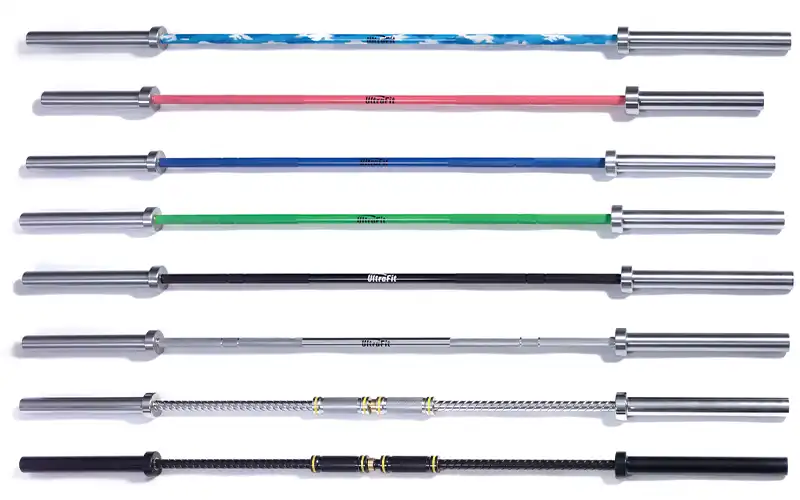
Quick Summary: A simple guide to Olympic barbell bars. No marketing talk. Just the facts you need — specs, types, and tips for picking the right bar, whether for a home gym or a commercial facility.
We cover standard sizes, surface finishes, rotation systems, knurling, and how to match a bar to your workout style. Product photos are for illustration only.
Need help choosing? Contact us →
We cover standard sizes, surface finishes, rotation systems, knurling, and how to match a bar to your workout style. Product photos are for illustration only.
Need help choosing? Contact us →
What Exactly Is an Olympic Barbell Bar?
An Olympic barbell bar is not just a long metal stick. It is a carefully made tool with exact measurements, spinning sleeves, and smart design. These features set it apart from cheap standard bars.
Let's look at the parts. Every Olympic barbell bar has four main sections:
The shaft — the long center part you hold. It is made from strong alloy steel. The strength is measured in PSI (pounds per square inch). Men's bars have a 28mm thick shaft. Women's bars use a 25mm shaft. The shaft has knurling — a rough crosshatch pattern cut into the metal. This gives your hands grip.
The sleeves — the thick ends where you put the weight plates. All Olympic sleeves are 50mm wide. Inside each sleeve is a spin system — either bushings or bearings. This lets the plates spin freely while you lift. When you do Olympic lifts (like snatch or clean & jerk), the bar needs to rotate. If it doesn't rotate, your wrists and elbows take all the stress.
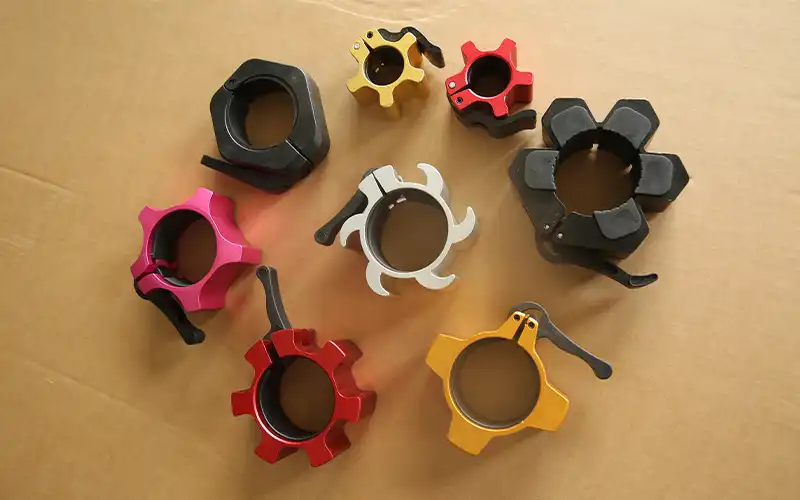
The collars — the raised rings between the shaft and sleeves. They do two things: keep the plates from sliding in, and mark the correct grip width for competition. On a men's 20kg bar, collars are 1,310mm apart (about 51.5 inches).
The end caps — the metal discs at both ends of the bar. They usually show the brand name or weight limit. On good bars, these are pressed or bolted on tight — not just glued.
Key Specifications: The Numbers That Actually Matter
When you look at a barbell bar product page, you will see many numbers. Here is what each number means and why it matters.
Tensile strength (PSI) — what it means: This number tells you how much force the bar can take before it bends or breaks. A bar rated at 190,000 PSI is fine for most gyms. Top-end bars go up to 215,000 PSI or higher. For most people, the difference is too small to notice. What matters more: does the factory actually test their bars to the number they claim?
Shaft diameter and your grip: A 28mm bar is thinner. This lets you wrap your hand around it more — good for Olympic lifts where hook grip is common. A 29mm bar is thicker and stiffer. Powerlifters prefer this — less bend during heavy squats and bench press. A 25mm women's bar is made for smaller hands. It bends more, which works well for women's weightlifting style.
Knurling — the part your hands actually feel: Knurling patterns range from "mountain" (sharp, bites into your hand) to "volcano" (flat, gentle). Sharp knurling grips better but hurts during high-rep workouts. Gentle knurling is kind to your hands but may need chalk for heavy lifts. Most all-purpose bars use medium-depth knurling — a safe middle choice.
| Spec | Men's Standard | Women's Standard |
|---|---|---|
| Weight | 20kg (44 lbs) | 15kg (33 lbs) |
| Total Length | 2,200mm (7.2 ft) | 2,010mm (6.6 ft) |
| Shaft Diameter | 28mm (Olympic) / 29mm (Powerlifting) | 25mm |
| Sleeve Diameter | 50mm | 50mm |
| Collar-to-Collar | 1,310mm | 1,310mm |
| Sleeve Length | 415mm | 320mm |
| Tensile Strength | 190,000 PSI (entry) to 215,000+ PSI (elite) | Same range |
Barbell Bar Types: Which One Matches Your Training Style?
Not all barbell bars do the same job. Picking the wrong type can slow your progress — or even cause injury.
Olympic Weightlifting Bar (Men's 20kg / Women's 15kg): Made for snatch and clean & jerk. These bars have more "whip" — they bend and bounce under load. This spring effect helps athletes speed up the bar during the pull. Needle bearings give smooth, fast sleeve spin. Knurling is usually gentle — the bar spins fast in your hands during these lifts. Center knurling is very light or missing — you do not want the bar scraping your throat during a clean.
Powerlifting Bar (20kg / 29mm shaft): Made for squat, bench press, and deadlift. These bars are stiffer — very little bend. Knurling is sharper — especially the center knurling, which grips your back during squats and keeps the bar from sliding. Sleeves usually use bushings, not bearings. Fast spin is not needed for powerlifting. The thicker 29mm shaft makes the bar more rigid.
Multipurpose / General Training Bar (20kg / 28–28.5mm shaft): The most common type in gyms and home setups. It sits between Olympic and powerlifting bars — bends enough for light Olympic lifts, stiff enough for squats and presses. Medium knurling with light or no center knurl. This is your best all-around choice if you do many different exercises and only want one bar.
Women's Bar (15kg / 25mm shaft): Shorter, lighter, with a thinner shaft for smaller hands. Bends more than a men's bar. Mainly used for women's Olympic weightlifting. Also works well as a general training bar for women. It is not a smaller copy of a men's bar — it has its own design and feel.
Technique / Training Bar (5–10kg): Very light bars, usually with a 25mm shaft. Used to teach beginners proper form before moving to a full-weight bar. Common in CrossFit gyms and weightlifting clubs for warm-ups and skill practice. Not made for heavy weights.
Surface Finishes: Chrome, Zinc, Bare Steel & More
The finish on your bar affects more than just looks. It changes how the bar feels in your hands, how well it fights rust, how much care it needs, and how it wears over time.
Quick tip: For commercial gyms, hard chrome is the best pick — looks good and needs almost no care. Zinc feels nicer in the hand and is easier to maintain than bare steel. Bare steel gives the best grip but you must wipe it clean and oil it often. Cerakote is gaining popularity for home gyms thanks to its aesthetics and durability. Stainless steel is the top choice — no coating to wear off, but it costs more.
| Finish | Rust Resistance | Grip Feel |
|---|---|---|
| Hard Chrome | Excellent — the most rust-resistant finish | Smooth, slightly slick when dry. Best paired with chalk. |
| Zinc (Bright or Black) | Good — resists surface rust in moderate humidity | More "natural" feel than chrome. Slightly porous, holds chalk better. |
| Bare Steel / Raw | None — requires regular oiling and maintenance | Best raw grip feel by far. Develops a patina over time. Preferred by many powerlifters. |
| Cerakote | Excellent — ceramic-based coating, highly durable | Slightly textured. Available in many colors. Resists scratches. |
| Stainless Steel | Excellent — naturally corrosion-resistant | Premium. No coating to wear off. Expensive but lasts a lifetime. |
Have questions about your specific requirements?
Talk to Our Team →Bushings vs. Bearings: The Spin Mechanism Explained
Why do the sleeves on an Olympic bar need to spin at all? Because during Olympic lifts, the bar rotates rapidly. If the plates were locked to the shaft, that rotation would transfer through your wrists, elbows, and shoulders — creating massive torque and dramatically increasing injury risk.
Bronze bushings are simple sleeve bearings — a bronze ring sits between the bar shaft and the rotating sleeve. They provide smooth, consistent rotation with moderate speed. Bushings are durable, require almost no maintenance, and are the standard choice for powerlifting bars and general-purpose bars. They spin fast enough for casual Olympic lifting but won't spin as freely as needle bearings under rapid acceleration.
Needle bearings use multiple small roller bearings packed between the shaft and sleeve. This design provides significantly faster, freer spin — exactly what competitive weightlifters need for the snatch and clean & jerk. The downside: needle bearings can develop play over time with heavy use, and they are more expensive to manufacture.
Composite bushings (a newer option): Self-lubricating polymer bushings that split the difference — smoother than bronze, more durable than needle bearings, and maintenance-free. Increasingly found on mid-to-high-end general training bars.
Which one do you need? If you train mostly squats, bench press, deadlifts, and rows — get a bushing bar. If you regularly perform Olympic lifts (snatch, clean & jerk) — get a bearing bar. If you do a bit of everything — a composite bushing bar is the sweet spot.
How to Choose the Right Barbell Bar for Your Needs
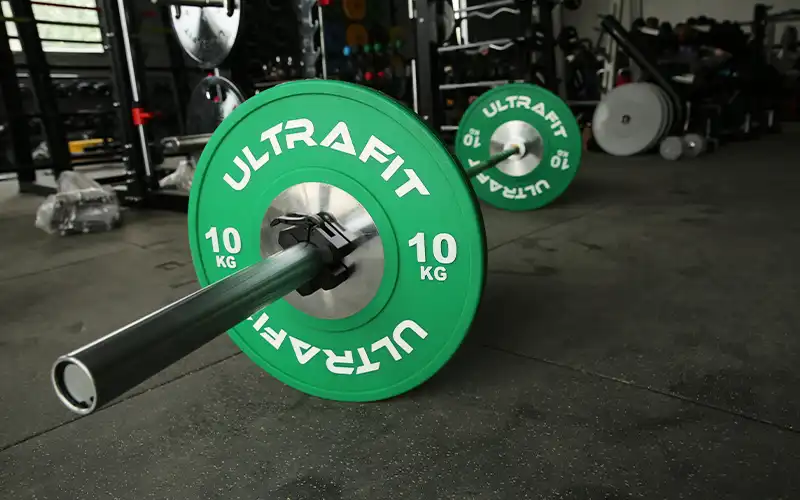
You know the specs. You know the types. Now let's map all of this to your actual situation.
For a home gym (mixed training): Get a 20kg multipurpose bar with a 28mm or 28.5mm shaft, medium knurling, hard chrome or zinc finish, and bronze bushings. Tensile strength around 190,000 PSI is plenty. You will be doing squats one day and power cleans the next — this bar handles both without complaint. A quality bar in this category is a worthwhile investment — it is the one piece of equipment your hands touch every session.
For a commercial gym (high traffic): Hard chrome finish is non-negotiable — it survives the humidity, sweat, and neglect of a public gym. Medium-aggressive knurling holds up to daily abuse. Bushings are sufficient unless you have a dedicated weightlifting platform area. Consider buying bars in batches and rotating them through maintenance — refinishing a batch of commercial bars every 2–3 years is cheaper than replacing them.
For Olympic weightlifting focus: Get a dedicated 20kg men's or 15kg women's Olympic weightlifting bar with needle bearings, 28mm (men's) or 25mm (women's) shaft, and minimal or absent center knurling. Tensile strength of 200,000 PSI or higher is recommended — the dynamic loads in a missed snatch or clean can be extreme.
For powerlifting focus: Get a 20kg power bar with a 29mm shaft, aggressive knurling including a pronounced center knurl, and bushings. The stiffness matters more than the spin. Bare steel or zinc finish for maximum grip — you are not going to care about rust if you are pulling 250kg every week.
For a gym owner stocking multiple bars: Buy 80% multipurpose bars and 20% specialty bars (Olympic or powerlifting, depending on your clientele). Most of your members will never outgrow a good multipurpose bar.
Barbell Bar Care & Maintenance: Make Your Bar Last
A good barbell bar should last 10+ years with proper care. A neglected one can deteriorate in 2 years — especially in humid environments. Here is how to protect your investment.
1. Wipe down after every session. Sweat is corrosive. Use a dry microfiber cloth on the shaft and sleeves. If your hands were particularly sweaty, use a slightly damp cloth followed immediately by a dry one. Do not let moisture sit on the bar overnight.
2. Brush the knurling weekly. Dead skin and chalk build up in the knurling grooves. A stiff nylon brush takes 30 seconds and makes a noticeable difference in grip quality. For deep cleaning, use a brass-bristle brush — it removes hardened chalk without damaging the knurling peaks. Do not use steel wire brushes, which can scratch the finish.
3. Oil bare steel bars regularly. Once a week in humid climates, once a month in dry climates. Apply a few drops of 3-in-1 oil or mineral oil to a cloth and wipe down the entire shaft. Wipe off excess — the goal is a thin protective film, not a wet surface. Chrome and zinc bars do not need oiling unless you notice surface rust starting.
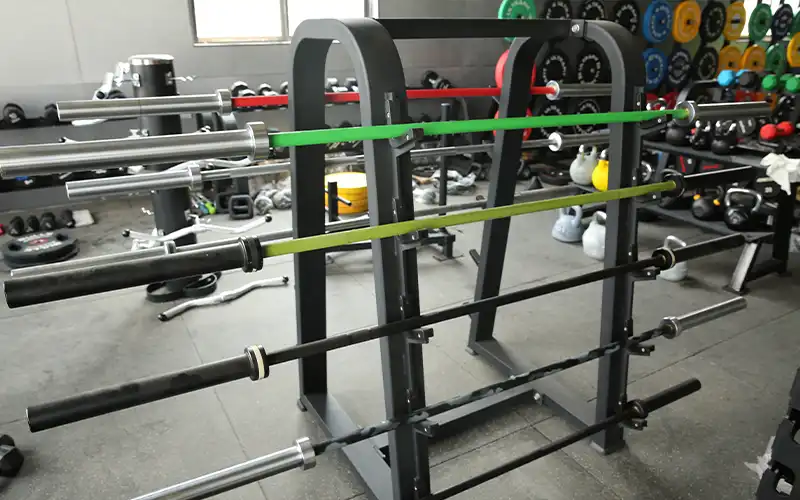
4. Store horizontally on a rack. Never lean a barbell bar against a wall long-term — it can develop a permanent bend. A wall-mounted bar holder or a dedicated bar rack keeps the bar straight and the sleeves off the ground. If you must store vertically, use a vertical bar stand that supports the full weight from the end, not leaning at an angle.
5. Do not drop an empty bar. Dropping a loaded Olympic bar on bumper plates is fine — that is what it's designed for. Dropping an unloaded or lightly loaded bar can bend the shaft and damage the rotation mechanism. Always control the bar down, even with bumper plates, unless there is adequate weight on it.
6. Inspect the sleeves every few months. Check that the end caps are tight and that the sleeves spin smoothly without grinding or wobbling. If a sleeve starts to seize or develop excessive play, service it before it gets worse — a loose sleeve under heavy load is a safety risk.
Frequently Asked Questions
- 1. What is the standard weight of an Olympic barbell bar?
- The standard Olympic barbell bar weighs 20kg (44 lbs) for men and 15kg (33 lbs) for women. Men's bars are 2,200mm long with a 28mm shaft diameter; women's bars are 2,010mm long with a 25mm shaft diameter.
- 2. Hard chrome vs. bare steel — which finish is better?
- It depends on your priorities. Hard chrome offers the best rust resistance and requires almost no maintenance — ideal for commercial gyms and humid environments. Bare steel provides the best grip feel and is preferred by many powerlifters, but it requires regular oiling to prevent rust. For most people, chrome or zinc offers the best balance of convenience and performance.
- 3. What is the difference between bushing and bearing bars?
- Bushings (bronze sleeve bearings) provide smooth, durable rotation suitable for general training and powerlifting. Needle bearings provide faster, freer spin that competitive weightlifters need for snatch and clean & jerk. For mixed training, bushing bars are the practical choice.
- 4. How much weight can an Olympic barbell bar hold?
- Quality Olympic bars are typically rated to hold 600–1,500 lbs (270–680 kg). The actual limit depends on tensile strength. A bar rated at 190,000 PSI can safely handle most commercial gym use. Elite competition bars rated 215,000+ PSI can withstand extreme loads. Always check the manufacturer's rated capacity rather than assuming.