
Knowledge Base August 4, 2026
OEM vs ODM Fitness Equipment: Which Model Is Right for Your Brand?
Quick Summary: OEM means you bring the design — we manufacture it. ODM means we have the product ready — you brand it and sell it. Both work. The right choice depends on your budget, timeline, and brand strategy.
This guide explains when OEM makes sense, when ODM is the smarter move, and how to pick the right factory partner for either path.
Explore our OEM/ODM capabilities →
This guide explains when OEM makes sense, when ODM is the smarter move, and how to pick the right factory partner for either path.
Explore our OEM/ODM capabilities →
OEM vs. ODM: What Do They Actually Mean for Fitness Equipment?
OEM and ODM are two different ways to get fitness equipment manufactured. They are not interchangeable — and picking the wrong one can cost you months of delays and thousands of dollars.
OEM (Original Equipment Manufacturing): You provide the design, specifications, and requirements. The factory produces the product exactly to your blueprint. Think of it as "build my design."
ODM (Original Design Manufacturing): The factory already has a product design, mold, and production process in place. You select from their existing catalog, add your brand, and sell it. Think of it as "brand my product."
A real fitness equipment example:
If you want a custom dumbbell with a unique hexagonal pattern, a specific rubber density, and your patented handle shape — that is OEM. The factory needs to create new molds, test the rubber formula, and develop a production process from scratch.
If you want high-quality rubber hex dumbbells with your logo, your color, and your packaging — that is ODM. The factory already has the molds, the rubber formula, and the production line running. They just customize the branding layer.
The key difference: In OEM, you own the design. In ODM, you own the brand — but the factory owns the product design.
OEM: When You Have Your Own Product Design
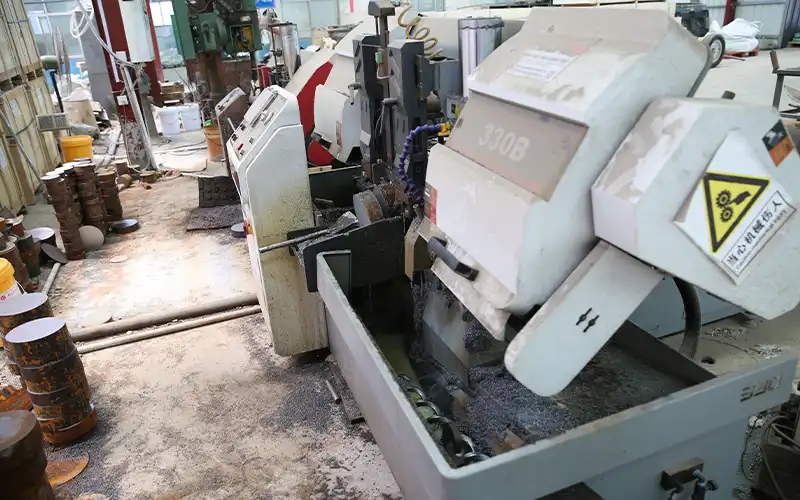
OEM is the right path when you have a clear product vision — and the budget and timeline to support it.
How the OEM process works (step by step):
1. Design & specification phase (2–4 weeks) — You provide technical drawings, 3D files, material specs, weight tolerances, and finish requirements. Our engineering team reviews for manufacturability and suggests optimizations.
2. Mold development (4–8 weeks) — Custom steel molds are designed, machined, and tested. For a new dumbbell design, this typically means one set of hex head molds per weight class. Mold cost is a one-time investment — once made, the molds belong to you.
3. Sampling & refinement (2–4 weeks) — First samples are produced using your molds. You test them, provide feedback, and we iterate until the sample matches your specification exactly.
4. Production (4–8 weeks, depending on volume) — Full production runs. QC checks at every stage.
5. Packing & shipping — Your custom packaging, your labeling, your pallet configuration.
Real costs of OEM:
OEM is best for:
• Established brands with existing product designs and customer base
• Companies that want a unique competitive advantage through design
• Buyers with sufficient budget to invest in tooling
• Patented or proprietary product concepts
• Large-volume orders that justify mold investment
| Cost Item | Typical Range |
|---|---|
| Mold tooling (per weight class) | One-time investment (contact for quote based on product) |
| Sample development | Refundable against first order (contact for details) |
| MOQ per weight class | 200–500 units |
| Total lead time (from design to delivery) | 12–20 weeks |
ODM: When You Want a Ready-Made Product with Your Brand
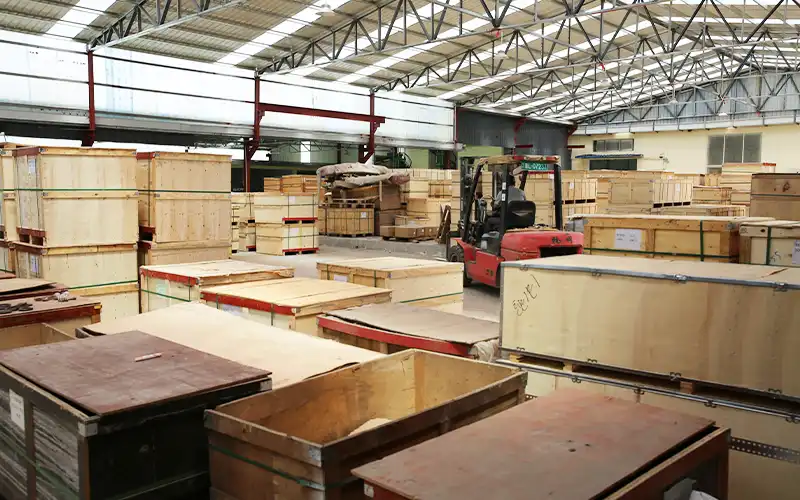
ODM is the faster, lower-risk path. You skip the design and tooling phase entirely and go straight to production with your branding applied.
How the ODM process works:
1. Product selection (1–2 days) — Browse our existing catalog of dumbbells, kettlebells, barbell plates, barbell bars, weight training accessories, and gym storage solutions. Choose the models, weight ranges, materials, and finishes that match your market.
2. Branding customization (1–2 weeks) — Submit your logo files, preferred colors (Pantone matching available), and packaging requirements. We produce branded samples for your approval.
3. Production (2–6 weeks) — Because the molds and production lines are already set up, we go straight into manufacturing with your brand applied.
4. Packing & shipping — Your branded packaging, FBA-ready labeling, or bulk pallets — whichever you need.
Real costs of ODM:
ODM is best for:
• Startups and new brands entering the fitness equipment market
• E-commerce sellers (Amazon FBA, Shopify) wanting to launch quickly
• Gyms and fitness chains launching a private-label equipment line
• Distributors looking to add branded products to their portfolio
• Buyers who need lower MOQ and faster turnaround
• Testing a new market before committing to custom tooling
| Cost Item | Typical Range |
|---|---|
| Mold tooling | $0 (existing molds used) |
| Branding setup (logo embossing, color matching) | One-time fee (contact for quote) |
| MOQ per weight class | 50–100 units |
| Total lead time (from selection to delivery) | 4–8 weeks |
OEM vs. ODM: Side-by-Side Comparison
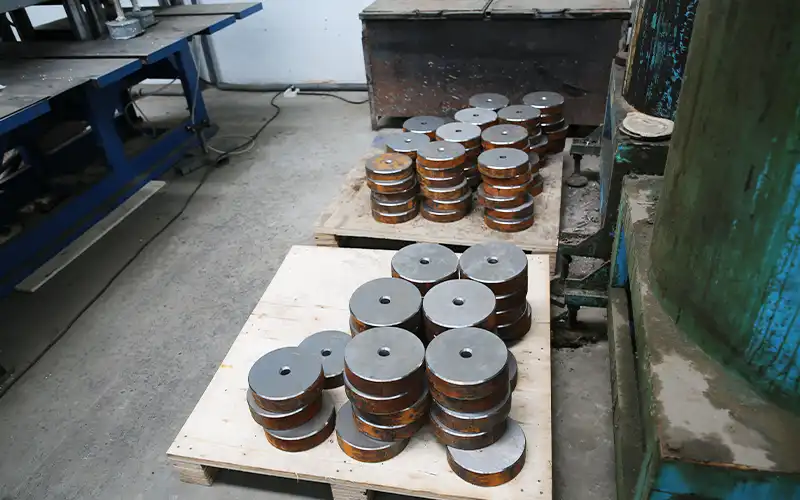
Here is the full comparison in one place. Use this to understand the trade-offs at a glance.
What often happens in the real world: Most of our long-term clients start with ODM — they test the market with our existing products under their brand. Once they have sales data and customer feedback, they transition selected products to OEM for competitive differentiation. This hybrid approach minimizes risk while building toward a unique product line.
| Factor | OEM | ODM |
|---|---|---|
| Product design ownership | You own the design and the molds | Factory owns the design; you own the brand applied to it |
| Uniqueness | Fully unique — no competitor has the same product | Same physical product may be sold under different brands (yours vs. others) |
| MOQ | Higher — 200–500 units per spec | Lower — 50–100 units per spec |
| Upfront investment | High — molds, samples, engineering | Low — branding setup only |
| Lead time | 12–20 weeks (first order) | 4–8 weeks |
| Unit cost | Slightly higher per unit (custom materials, smaller batch efficiency) | Lower per unit (standardized production, higher volume efficiency) |
| Quality control input | You define the QC standards and acceptance criteria | Factory's established QC process — but you can add requirements |
| Design flexibility | Complete — shape, material, weight, texture, color, packaging | Limited — logo, color, packaging, minor finish options |
| Minimum technical knowledge needed | High — you need to understand materials, tolerances, and manufacturing constraints | Low — factory handles all technical decisions |
| Patent/IP protection | Strong — your design, your patent, your exclusive tooling | Moderate — trademark on the brand, but product design is shared |
| Best for | Established brands, patented designs, unique competitive positioning | Startups, e-commerce sellers, market testing, fast launch |
Have questions about your specific requirements?
Talk to Our Team →5 Questions to Decide: OEM or ODM?
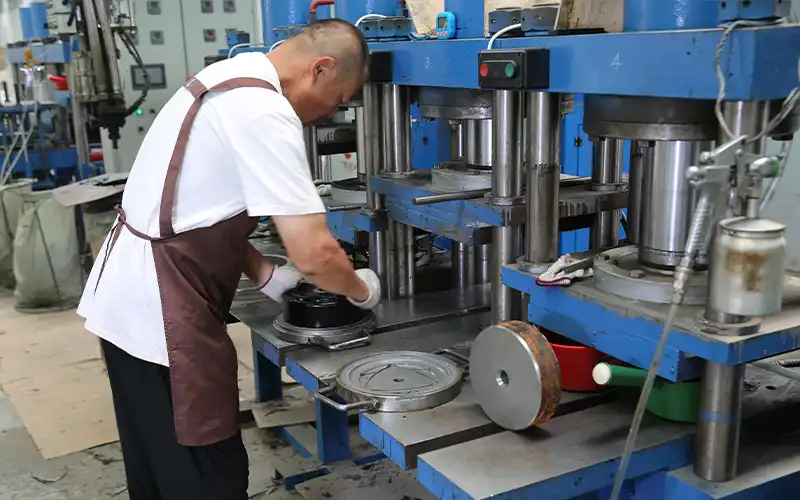
Answer these five questions honestly — the answers will tell you which path to take.
1. Do you have a product design already?
Yes, with technical drawings or 3D files → OEM
No, I just know I want to sell fitness equipment → ODM 2. What is your timeline to market?
I need products in my warehouse in 4–8 weeks → ODM
I can wait 3–5 months for custom development → OEM 3. What is your budget for upfront investment?
Limited budget — I want to minimize upfront cost → ODM
Sufficient budget for custom molds and development → OEM 4. How important is product uniqueness to your brand?
Critical — my brand exists because of unique products → OEM
Important but not urgent — I can start with standard products and customize later → Start ODM, transition to OEM 5. What is your order volume per product?
100–300 units per SKU → ODM
500+ units per SKU consistently → OEM (mold investment becomes cost-effective) Most common path we see: An Amazon seller starts with 3–5 ODM products (dumbbells, kettlebells, plates) at 100 units each. Starting with a modest initial investment. After 6 months of sales data, they identify the top 2 sellers and transition those to OEM with custom designs. By month 12, they have a mixed catalog — ODM for volume fillers, OEM for hero products.
Yes, with technical drawings or 3D files → OEM
No, I just know I want to sell fitness equipment → ODM 2. What is your timeline to market?
I need products in my warehouse in 4–8 weeks → ODM
I can wait 3–5 months for custom development → OEM 3. What is your budget for upfront investment?
Limited budget — I want to minimize upfront cost → ODM
Sufficient budget for custom molds and development → OEM 4. How important is product uniqueness to your brand?
Critical — my brand exists because of unique products → OEM
Important but not urgent — I can start with standard products and customize later → Start ODM, transition to OEM 5. What is your order volume per product?
100–300 units per SKU → ODM
500+ units per SKU consistently → OEM (mold investment becomes cost-effective) Most common path we see: An Amazon seller starts with 3–5 ODM products (dumbbells, kettlebells, plates) at 100 units each. Starting with a modest initial investment. After 6 months of sales data, they identify the top 2 sellers and transition those to OEM with custom designs. By month 12, they have a mixed catalog — ODM for volume fillers, OEM for hero products.
How LanDer Handles Both OEM and ODM — Under One Roof
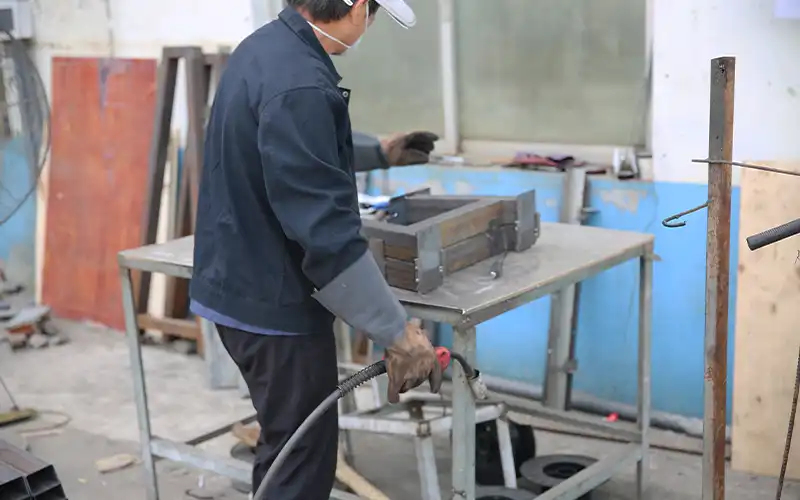
We do not outsource or broker. OEM and ODM both happen in our own ISO 9001-certified factory in Rizhao, Shandong.
What this means for you:
• One point of contact — You are not dealing with a trading company that subcontracts to unknown factories. Your project stays under one roof from mold to container.
• In-house mold engineering — Our mold design and machining team works on-site. For OEM projects, your mold never leaves the building. Changes and iterations happen fast because the engineer who designed your mold is 50 meters from the production line.
• 20+ years of production data — We have manufactured every type of fitness equipment covered by our ODM catalog. For OEM projects, we can predict manufacturability issues before they become costly mistakes — because we have probably built something similar before.
• ISO 9001 quality system — Whether OEM or ODM, every order goes through the same documented QC process. You get inspection reports, not promises.
• Flexible transition path — Start with ODM to test your market. When you are ready for OEM, your production history, relationship, and supply chain are already in place. No need to find a new factory — just evolve the partnership.
• Shipping to 50+ countries — We handle FBA labeling, retail-ready packaging, bulk pallets, and all export documentation. Your products arrive the way your customers expect.
Ready to Start Your Fitness Equipment Project?
Here is the simplest first step: tell us what you want to sell, and we will tell you whether OEM or ODM makes more sense — specifically for your situation.
No generic advice. No sales pitch. Just an honest recommendation based on 20+ years of manufacturing fitness equipment for brands in 50+ countries.
Contact us at info@landersports.com or visit our Contact page. Tell us:
• What products are you interested in?
• Do you have existing designs, or are you exploring options?
• What is your target market and price point?
• What is your approximate timeline and order volume? We will respond within 48 hours with a recommendation — OEM, ODM, or a hybrid approach — along with estimated costs and timeline. Explore our product range: Dumbbells | Kettlebells | Barbell Plates | Barbell Bars | Weight Training Accessories | Gym Storage
• What products are you interested in?
• Do you have existing designs, or are you exploring options?
• What is your target market and price point?
• What is your approximate timeline and order volume? We will respond within 48 hours with a recommendation — OEM, ODM, or a hybrid approach — along with estimated costs and timeline. Explore our product range: Dumbbells | Kettlebells | Barbell Plates | Barbell Bars | Weight Training Accessories | Gym Storage
Frequently Asked Questions
- 1. What is the difference between OEM and ODM for fitness equipment?
- OEM means you provide the design and specifications — the factory builds to your blueprint. ODM means the factory has an existing product design — you select it, add your brand, and sell it. OEM gives you unique products but costs more upfront. ODM is faster and cheaper to start, but the same product design may be sold by other brands.
- 2. Which is better for a new fitness equipment brand — OEM or ODM?
- For most new brands, we recommend starting with ODM. It keeps your upfront investment low, gets you to market in 4–8 weeks, and lets you test which products sell before committing to custom tooling. Once you have sales data, you can transition top performers to OEM.
- 3. What is the minimum order quantity (MOQ) for OEM vs ODM?
- ODM typically starts at 50–100 units per weight class, with no mold investment. OEM requires 200–500 units per weight class, plus a one-time mold tooling investment (varies by product — contact for quote). These are general ranges — exact MOQ depends on the product type and complexity.
- 4. Do I own the product design/mold if I do OEM with your factory?
- Yes. When you invest in custom mold tooling for an OEM project, the molds belong to you. They are stored at our facility and used exclusively for your production. If you ever need to move production, your molds can be transferred. We also sign NDAs for all OEM projects to protect your design IP.