

Knowledge Base August 11, 2026
Exercise Equipment Guide: How to Choose the Right Gear for Any Gym
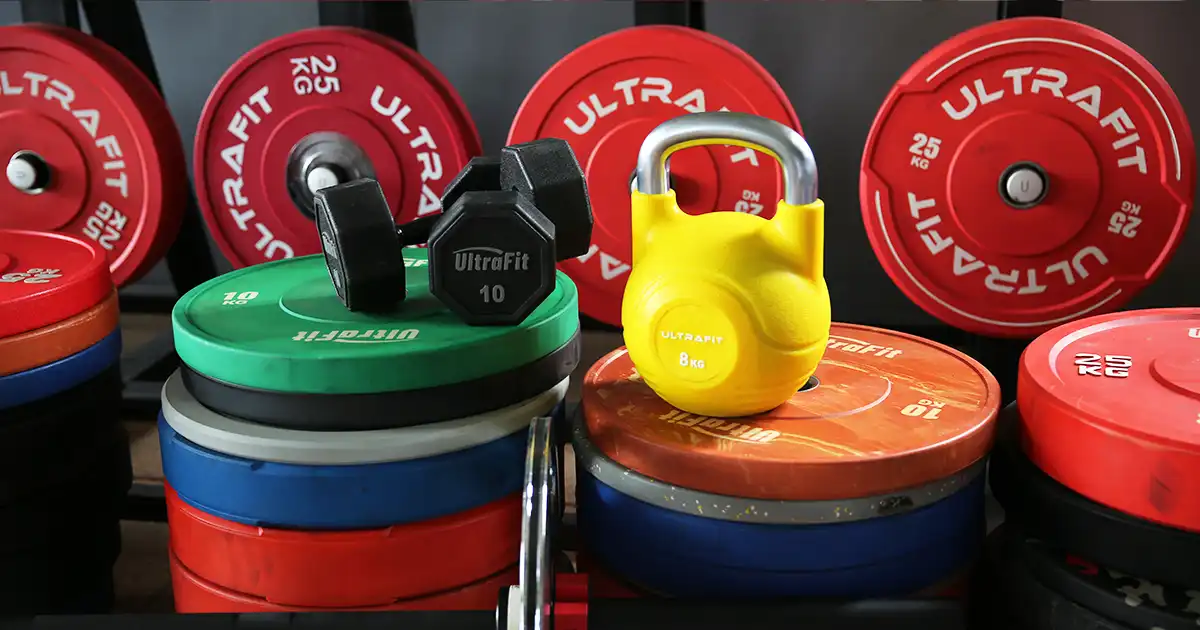
Quick Summary: A practical guide to choosing exercise equipment that actually works for you — not just what looks good in a catalog.
We cover free weights (dumbbells, kettlebells, weight plates), barbells and racks, plus storage solutions. No brand pushing. Just the factors that matter: material, durability, space, and real-world use.
Need help choosing equipment for your gym? Contact us →
We cover free weights (dumbbells, kettlebells, weight plates), barbells and racks, plus storage solutions. No brand pushing. Just the factors that matter: material, durability, space, and real-world use.
Need help choosing equipment for your gym? Contact us →
Free Weights: Dumbbells, Kettlebells & Weight Plates — The Foundation of Every Gym
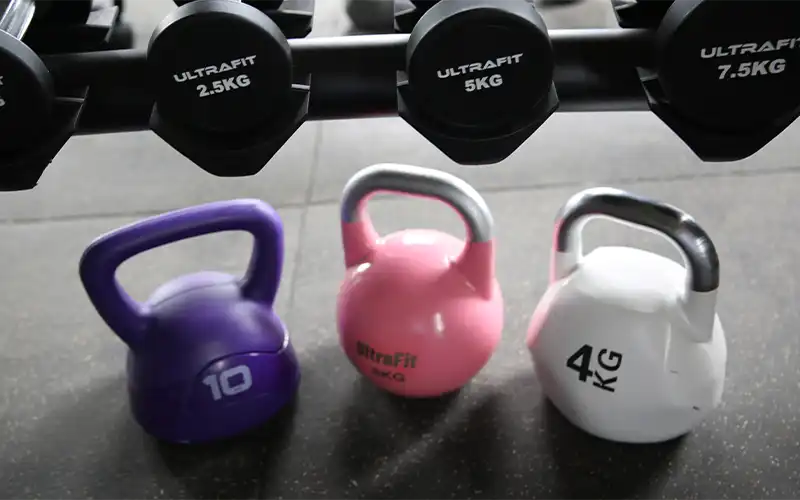
Free weights are the most versatile equipment in any gym. They don't lock you into a fixed movement path like machines do — your body does the stabilizing. That's why a squat rack with barbells and plates can train your entire body, while a leg press machine only does one thing.
But "free weights" isn't just one thing. Let's break down each category — what they are, what they're made of, and what actually matters when you're choosing.
Dumbbells: The Swiss Army knife of the gym. You can do presses, rows, curls, lunges, farmer's carries — the list is endless. The key differences come down to material and shape:
Kettlebells: Not just a dumbbell with a handle on top. The offset center of gravity is what makes kettlebells unique — swings, snatches, and Turkish get-ups work your body differently than dumbbell equivalents. Types to know:
• Rubber-coated kettlebell — cast iron body with partial or full rubber coverage. Quieter than bare cast iron, gentler on floors, good for commercial use.
• Competition kettlebell — all competition kettlebells are the same size regardless of weight (the hollow shell changes thickness inside). Steel construction, color-coded by weight. Preferred by kettlebell sport athletes for consistent feel at any weight.
• Cast iron kettlebell — the classic. Gets bigger as weight increases. Raw or painted finish. Cheap, effective, and widely available. Best value for most gyms.
• Soft kettlebell (sand/water filled) — used mainly for outdoor bootcamps and functional training. Won't damage floors if dropped, but lacks the crisp feel of cast iron.
Weight Plates: What goes on the bar matters just as much as the bar itself. Your choice of plate type directly affects noise level, floor protection, and the type of lifts you can safely do — especially if you lift alone without a spotter.
• Bumper plates — rubber plates designed to be dropped from overhead. Essential for Olympic weightlifting (snatch, clean & jerk). The bounce is a safety feature — the plates absorb impact so the bar doesn't. Come in various color-coded competition versions and basic black training versions.
• Rubber-coated iron plates — iron core with a rubber shell. Thinner than bumpers (so you can load more weight on the bar), quieter than bare iron, but NOT designed for repeated overhead drops. Best for powerlifting and general strength training.
• Cast iron / steel plates — the traditional plate. Thin, simple, affordable. No floor protection. Grip holes or handles vary by brand. Fine for controlled lifts — not suitable for dropping.
• PU / TPU plates — premium urethane-coated plates. Extremely durable surface, no rubber odor, consistent colors. The choice for high-end commercial facilities and competition venues.
| Type | Material | Best For |
|---|---|---|
| Rubber Hex Dumbbell | Cast iron core + rubber coating | Commercial gyms — durable, won't roll, protects floors |
| Urethane Dumbbell | Steel core + polyurethane shell | Premium gyms — no odor, no fading, longest lifespan |
| Round Rubber Dumbbell | Cast iron + rubber coating | General training — traditional look, comfortable grip |
| Cast Iron Dumbbell | Solid cast iron, painted or bare | Budget setups — classic, but loud and can damage floors |
| Adjustable Dumbbell | Varies, usually steel + plastic housing | Home gyms with tight space — one pair replaces a full rack |
Barbells & Racks: The Centerpiece of Any Strength Setup
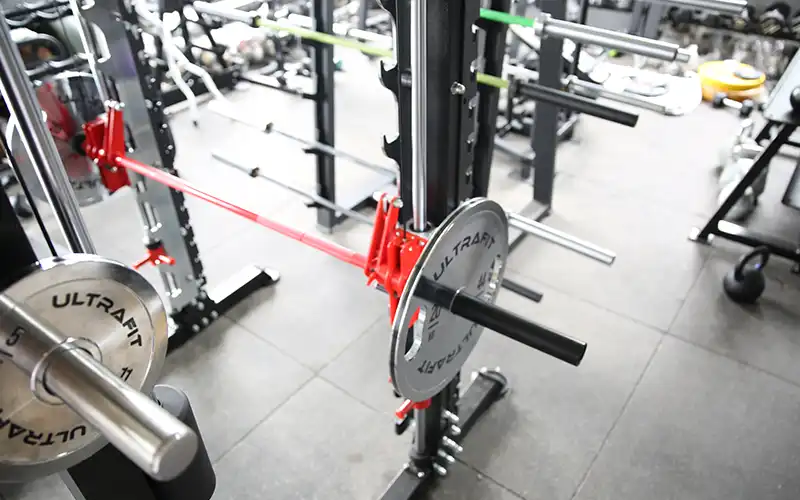
A barbell is a precision tool — not just a metal bar. And the rack it sits on is your safety system. Get either one wrong and your training suffers, or worse, you get hurt.
The Barbell: Key factors to consider
You don't need to be an expert, but you should know these basics:
• Olympic bar vs standard bar: Olympic bars have 50mm rotating sleeves, weigh 20kg (men's) or 15kg (women's), and are made for serious training. Standard bars have 25mm non-rotating sleeves and are lighter — okay for beginners but quickly outgrown. If you plan to lift more than 60kg, get an Olympic bar.
• Shaft diameter: 28mm for Olympic lifting (allows hook grip), 29mm for powerlifting (stiffer, better for heavy squats), 28.5mm for general purpose. A 1mm difference is very noticeable in your hands — don't ignore it.
• Knurling: The textured pattern where you grip. Too sharp hurts during high reps. Too smooth means the bar slips when you sweat. Medium knurling is the safe bet for most gyms.
• Finish: Hard chrome for commercial gyms (rust-resistant, low maintenance), zinc for a more natural feel, bare steel for best grip but needs regular oiling, Cerakote for colors and durability, stainless steel for premium lifetime use.
Racks, Cages & Benches: The safety framework
What to check before buying a rack: Look at the steel gauge — 11-gauge (about 3mm thick) is standard for commercial racks. Check the hole spacing — Westside spacing (1 inch between holes in the bench zone) gives you fine adjustment where it matters most. Make sure it has a pull-up bar on top — it's a small feature but adds a lot of training value. And always bolt it down — no matter how heavy the rack is, lateral force during a missed rep can tip an unbolted rack.
| Type | What It Does | Best For |
|---|---|---|
| Squat Stand / Half Rack | Two independent uprights with J-hooks | Small spaces, budget setups — gets the job done but less stable |
| Full Power Rack / Squat Cage | Four-post cage with adjustable safety bars | The gold standard — squat, bench, pull-ups, all with safety pins. Worth the space it takes. |
| Half Rack / Combo Rack | Two front posts + rear storage posts | Good compromise between full cage and stand. Plate storage built in. |
| Flat Bench | Fixed flat bench — no moving parts | Most stable for heavy bench press. Less versatile than adjustable. |
| Adjustable Bench | Back pad tilts from flat to near-upright | Versatile — incline press, shoulder press, seated curls. Commercial gyms usually stock both flat and adjustable. |
Storage & Organization: Why It Matters More Than You Think
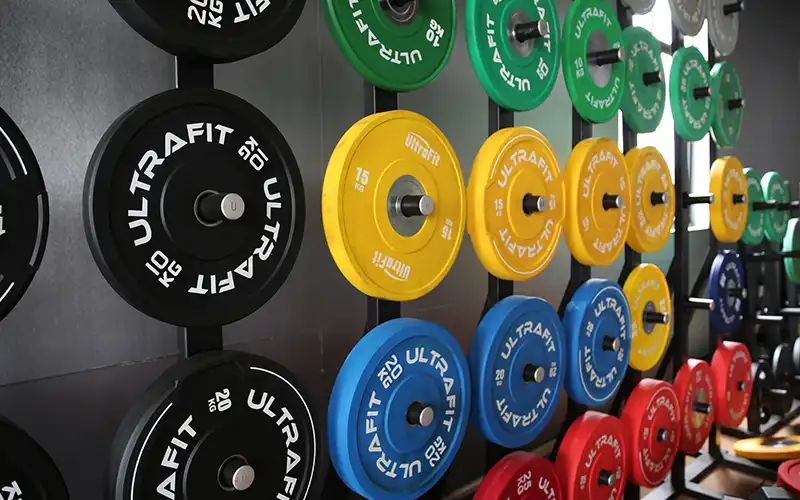
A well-organized gym isn't just about looks. Proper storage extends equipment life, prevents accidents, and — for commercial gyms — directly impacts member experience and retention.
Nobody wants to trip over a dumbbell on the floor or hunt for matching plates during their workout. Here's what you need:
Dumbbell Racks: The most obvious piece of gym storage, yet often overlooked when budgeting. A good dumbbell rack should be:
• Sturdy welded steel — not bolted-together sheet metal
• Rubber-lined saddles where the dumbbells rest — protects the coating on your expensive dumbbells
• Angled tiers — lets users clearly see and access each weight without squatting down
• Three-tier for full sets (2.5–50kg), two-tier for partial sets
Weight Plate Trees / Racks: Plates stacked on the floor are a tripping hazard and a back strain waiting to happen. A plate tree with horizontal pegs keeps plates organized and at a comfortable lifting height. Look for:
• Angled pegs — plates slide on and off easily
• Rubber or plastic sleeves on pegs — prevents metal-on-metal contact that chips your plates
• At least 6 pegs per tree — separate pegs for different plate diameters (bumper plates need wider peg spacing than iron plates)
Barbell Storage: Bars leaning against walls will warp over time. Options:
• Wall-mounted bar holder: Best space-saver. Horizontal or vertical. Holds 3–10 bars.
• Floor-standing bar rack: Mobile, holds 6–12 bars. Good for gyms that rearrange equipment.
• Built into the power rack: Some full racks include rear bar storage posts — convenient but limits access during training.
Gym layout basics — the 1-meter rule: Leave at least 1 meter (3 feet) of clear space around every piece of equipment. This isn't just for comfort — it's for safety. If someone misses a clean and drops a loaded barbell, you need clearance for the bar to bounce without hitting nearby equipment (or people). In commercial gyms, 1.2–1.5 meters between stations is safer.
Flooring matters too. Rubber gym flooring tiles (at least 8mm thick for commercial use, 15mm+ for free-weight zones) protect your subfloor, reduce noise, and save your equipment from grinding against concrete. Interlocking tiles are easy to replace if one section gets damaged. Rolled rubber flooring looks cleaner but is harder to repair — pick your trade-off.
How to Build Your Equipment List: Start with Your Goal, Not the Catalog
The biggest mistake people make when buying exercise equipment is starting with what's available instead of starting with what they need. Here's a framework to avoid that trap.
Step 1: Define your training style. Be honest — most people don't actually need every piece of equipment. Ask yourself (or your gym members) what training actually happens:
• General strength training (squat, bench, deadlift, rows, presses) → Barbell + plates + power rack + adjustable bench + dumbbell set
• Olympic weightlifting (snatch, clean & jerk) → Olympic bar + bumper plates + lifting platform + squat stand
• Functional / HIIT training (kettlebells, medicine balls, bodyweight) → Kettlebell set + wall balls + plyo box + battle ropes + slam balls
• Bodybuilding / hypertrophy (isolation work, high volume) → Full dumbbell set + cable machine + adjustable bench + specialty bars
• Mixed-use commercial gym (all of the above, different zones) → Everything, organized into zones
Step 2: Build your list in priority order. Don't try to buy everything at once. Start with the essentials, then expand:
Step 3: Leave room to grow. If you're stocking a gym, leave 20–30% of your floor space empty on day one. You will discover what your members need after they've been training for a few months. Filling every square meter at the start means expensive rearranging later — or worse, having no room for the equipment people actually ask for.
The bottom line: More equipment does not equal a better workout. A well-chosen barbell, a sturdy rack, a set of dumbbells, and enough plates to challenge you — that setup can train your entire body for years. Everything else is nice to have, not need to have.
| Priority | Equipment | Why It's First |
|---|---|---|
| 1st | Power rack or squat stand | Squats, bench press, overhead press — this is the backbone. Everything else is built around it. |
| 2nd | Olympic barbell (20kg) + weight plates (at least 160kg total) | Without a bar and plates, the rack is just standing there. Start with bumper plates if you plan any overhead work. |
| 3rd | Adjustable bench | Flat is enough for powerlifting, but adjustable opens up incline/decline work — worth the small price difference. |
| 4th | Dumbbell set (5–25kg for home, 2.5–50kg for commercial) | Accessory work, unilateral training, exercise variety. Rubber hex are the best value for most gyms. |
| 5th | Plate tree / storage rack | Safety and organization. Don't skip this — plates on the floor lead to damaged plates and injured backs. |
| 6th | Kettlebell set (8–32kg) | Adds conditioning and variety. Start with 4–6 common sizes; you can always add more later. |
Have questions about your specific requirements?
Talk to Our Team →Frequently Asked Questions
- 1. What free weights should I buy first for a home gym?
- Start with a 20kg Olympic barbell, at least 160kg of weight plates (mix of bumper and rubber-coated plates), a power rack with safety bars, an adjustable bench, and a basic dumbbell set from 5–25kg. This core setup covers squat, bench press, deadlift, overhead press, rows, and accessory work for years of training.
- 2. Rubber dumbbells vs urethane dumbbells — which is better?
- Rubber dumbbells offer the best value for most gyms — durable, affordable, and available in a wide range of configurations. Urethane dumbbells have a premium surface that resists fading, won't develop a rubber smell, and lasts longer — but they cost noticeably more. For commercial gyms with high traffic, urethane pays off over time. For home gyms, rubber is the smarter investment.
- 3. Do I need bumper plates or are rubber-coated plates enough?
- If you do Olympic lifts (snatch, clean & jerk) where you drop the bar from overhead — you need bumper plates. For general strength training (squat, bench, deadlift) where the bar is always controlled — rubber-coated plates are sufficient, more compact, and less expensive.
- 4. How much space do I need for a basic gym setup?
- A power rack with a barbell and bench needs a footprint of approximately 3m × 3m (10ft × 10ft), including clearance for loading plates and safe movement. Add 1.5m × 1.5m for a dumbbell rack area. Total minimum for a functional home gym: about 12–15 square meters (130–160 sq ft). Commercial gyms should budget 3–4 square meters per training station.